Let's meet
Level 16, Wisma UOA Damansara II, No 6, Changkat Semantan, Bukit Damansara Kuala Lumpur, 50490 Malaysia
These industries benefit the most from having a 3D virtual tour to improve customer engagement and sales potential
Posted by Ashley Ng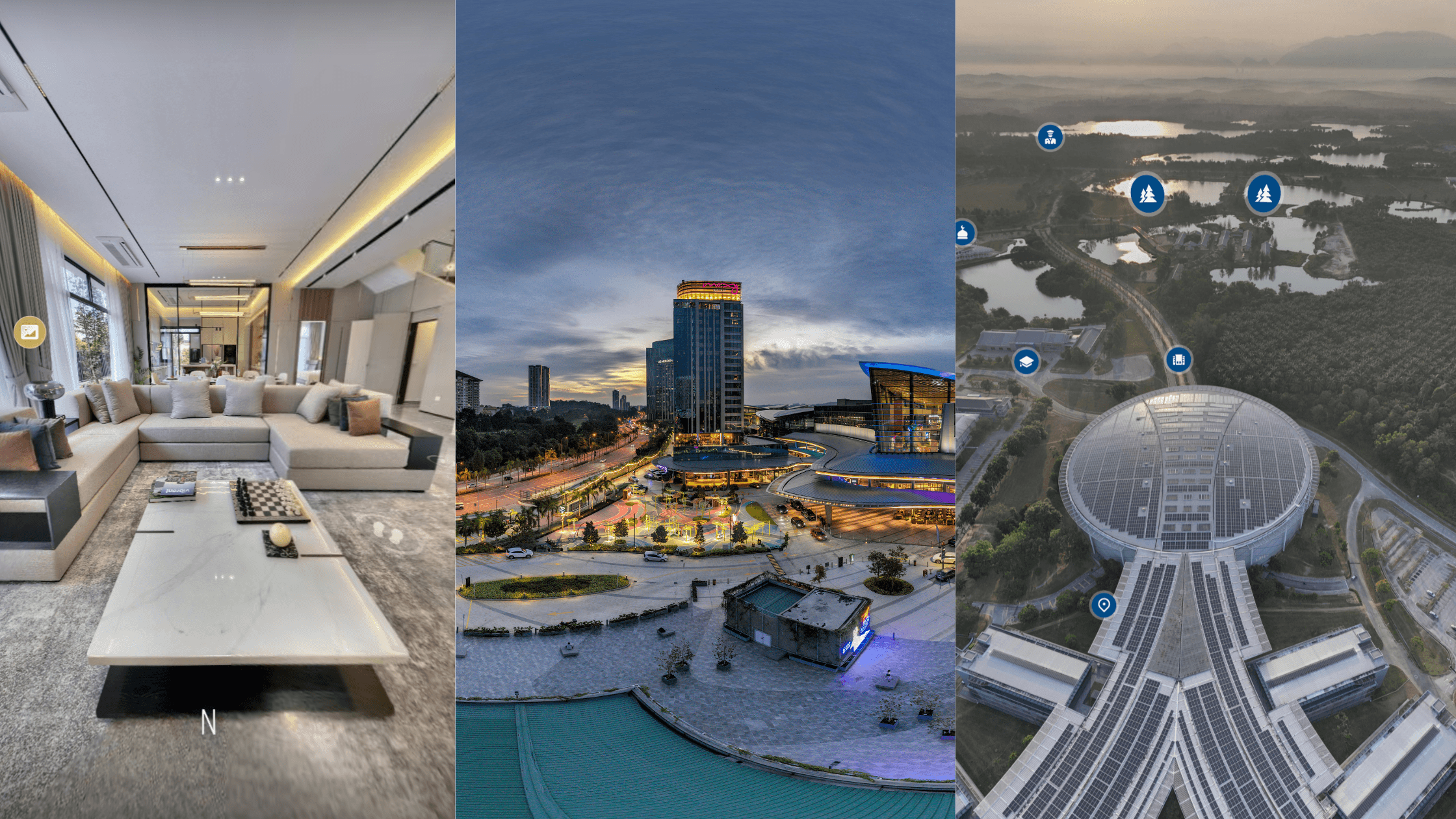
A virtual tour is more than a flat 360° photo that you can swipe around. It is a realistic digital twin of a physical space that visitors can walk through from their phone, tablet, or laptop, moving from room to room as if they were actually there. Users can change viewpoints, zoom in on details, and access extra information along the way. For brands, that means turning a static page into an interactive experience that holds attention.
People now research almost everything online before they commit. Whether they are deciding on a new apartment, a resort stay, a museum visit, or a factory partner, they want to feel confident before they show up in person. Immersive content bridges the gap between online research and real-world decisions. This leads to better-qualified leads, fewer wasted site visits, and faster sales cycles.
At Actsugi Technologies, we focus on creating this kind of immersive media from our base in Southeast Asia. Through 3D virtual tours, 360° imagery, and drone visuals, we help spaces tell their stories in a way that feels intuitive and trustworthy. In this article, we will explore seven distinct industries that are already seeing strong marketing and sales benefits from 3D virtual tours and how they use them to upgrade customer engagement.
Explore virtual tours from different industries created by Actsugi
Here are the top sectors where we see virtual tours moving the needle on bookings, sign-ups, and conversions.
Property buyers and tenants rarely make decisions from photos alone. A virtual tour lets them explore a listing at their own pace, understand the flow of the space, and picture how their lives might fit there. For residential projects, this helps serious prospects pre-qualify themselves before booking a site visit. It reduces no-shows and casual viewings that cost your team time, while giving overseas or out-of-town buyers a realistic feel for units and surroundings.

Commercial and industrial properties see similar advantages. Office tenants, logistics operators, and manufacturers want to see layout, loading access, ceiling heights, and utilities. A virtual tour gives them clarity on how teams and equipment might be arranged. They can determine whether the space matches operational needs and what kind of upgrades or fit-outs might be required. Developers use 3D virtual tours of show units, sales galleries, and amenities to support pre-sales, especially when the actual building is not ready yet. This can speed up early bookings and attract regional investors who cannot visit every project in person but still want a confident sense of quality and design.
Explore virtual tours from different industries created by Actsugi
Hospitality decisions are emotional and detail-driven. Guests want to know if the room really looks like the photos, what the view is like, and whether the pool, spa, or kids area fits how they travel. A 360 virtual tour helps hotels and resorts show the exact layout of rooms and suites, including bed placement and circulation. Properties can highlight unique views, balconies, and in-room amenities while presenting lobbies, restaurants, pools, and wellness spaces with authentic ambiance.

This transparency encourages guests to book higher-value room categories because they can clearly see the difference between options. For MICE and group business, planners can inspect ballrooms, meeting rooms, and breakout areas without multiple site inspections. They can also share the 360 virtual tour with decision-makers and sponsors, which speeds up approvals. These virtual tours can be integrated on the hotel website, shared with travel partners, and embedded on booking platforms that support rich media. In a crowded hospitality market, this helps a property stand out and reduces the gap between online impressions and on-property reality.
Explore virtual tours from different industries created by Actsugi
Museums, galleries, and cultural landmarks are not only visitor attractions; they are guardians of stories and heritage. 3D virtual tours give these institutions a way to preserve spaces digitally and extend their reach far beyond physical walls. The technology allows for the digital preservation of galleries, exhibition layouts, and heritage architecture. It provides virtual access for students, researchers, and global audiences that cannot visit in person. Institutions can also offer rich storytelling through annotations, audio commentary, and multimedia hotspots.

For educators, a virtual tour can support lesson plans, pre-visit briefings, or follow-up assignments. For people with mobility challenges or those living far away, a 3D virtual tour can be the first realistic opportunity to explore important cultural sites. Many institutions are also exploring hybrid experiences, where an on-site visit is supported by digital content, or where special online exhibitions create new sponsorship and engagement opportunities without being limited by floor space.
Explore virtual tours from different industries created by Actsugi
Event planners juggle tight timelines, multiple stakeholders, and long checklists. A 3D virtual tour of a venue removes a lot of friction from that process. Venues use virtual tours to show different setups for weddings, social events, corporate receptions, and conferences. They help clients visualize guest flow, photo spots, stage positions, and buffet locations. The technology answers common questions about capacity, ceiling height, access points, and backstage areas.
With interactive tags, floor plans, and capacity markers embedded in the 3D virtual tour, planners can get the facts they need without repeated site visits. Stakeholders who are based in other cities can review the space online to make decisions faster. This does not replace in-person visits entirely, but it narrows the shortlist early on. By the time a client walks through the door, they are usually more serious, more aligned, and further along in the planning process.
Explore virtual tours from different industries created by Actsugi
Factories, assembly plants, and specialized workshops often struggle to show their value without disrupting operations. Hosting VIP visits can be time-consuming, and not every stakeholder can safely enter production areas. A 3D virtual tour provides a safe way to showcase production lines, safety procedures, and quality controls. It offers transparent access for potential customers, suppliers, and investors. Furthermore, it serves as a training tool for new staff to understand layouts, routes, and equipment placement.
These 360 virtual tours can highlight key process steps, certifications displayed on walls, and unique capabilities that differentiate a facility. When stakeholders see a clean, orderly, and well-designed plant, trust rises. This visual proof supports sales discussions and long-term partnerships, especially in B2B relationships where due diligence is critical.
Explore virtual tours from different industries created by Actsugi
Schools and universities face a highly competitive landscape for student recruitment. They use 360 virtual tours to showcase campuses to prospective students and their parents. They can highlight specialized areas like science labs, art studios, sports facilities, and dormitories.

This is particularly valuable for international recruitment, where on-site visits are simply not feasible for most families. A 360 virtual tour allows students from across the globe to feel a connection to the campus before they enroll.
Explore virtual tours from different industries created by Actsugi
Healthcare providers use 3D virtual tours to reduce patient anxiety and build trust. When patients can explore clinics, diagnostic centers, and hospital wings in advance, they feel more prepared and informed.
Knowing exactly where to park, how to find the reception desk, and what a treatment room looks like removes a layer of stress from an already challenging situation. This is especially helpful for families, seniors, and those facing complex treatments.
Explore virtual tours from different industries created by Actsugi
Once you see the potential of a 360 virtual tour or 3D virtual tour, the next step is finding the right partner. You should ask about the quality of capture, lighting, and color accuracy. It is important to understand their hosting and access options across various devices and platforms. You will also want to know how interactive elements like tags, labels, and floor plans are handled, alongside their policies on data privacy, security, and content ownership.
Industry experience plays a huge role in the final result. Property, hospitality, cultural institutions, and industrial sites all have different workflows, safety considerations, and storytelling needs. A team that has worked across these sectors in Southeast Asia, like ours at Actsugi, understands practical challenges such as busy schedules, public-facing spaces, and complex layouts.
From planning on-site shoots and coordinating around operations, to refining virtual tours with drone views, annotations, and integration into your broader marketing stack, the right partner will treat your space as a story to be told, not just a location to be scanned.
Create your virtual tour with Actsugi.
Actsugi is a virtual tour presentation technology company with operations in Malaysia, Singapore and Indonesia. We help businesses across different sizes and sectors craft immersive experiences, from hospitality to property, industrial, education, culture, medical and more.
We collaborate with you to understand your goals, highlight your most important features, and deliver a 360 virtual tour or 3D virtual tour that works beautifully across devices. If you are ready to explore concepts, timelines, and pricing, contact us today so we can help you move from idea to launch.